
The remains of a further 22 infants have been found at the site of a former mother and baby home in Ireland, investigators have said.
It means 99 sets of infants' remains have now been discovered at the former St Mary's mother and baby home in Tuam, County Galway, since searches began last July.
The latest remains to be found were uncovered between 1 July and 15 July in an area that had been covered with gravel and used for vehicle access, with no surface markers to indicate the presence of burials.
Mother and baby homes were institutions in Ireland where young pregnant women were sent, often under pressure from local clergy. At the homes they would give birth and eventually be separated from their children, who were offered up for adoption.
Death records for the St Mary's home list children as dying from malnutrition, as well as diseases such as measles and tuberculosis - which were rife at the time.
What happened at Tuam?
The Office of the Director of Authorised Intervention Tuam (ODAIT), which is leading the search, said coffined infants were recovered and hand-excavation is continuing, adding they had managed to collect seven more DNA reference samples, bringing the total number taken to 62.
Investigators, supported by international experts, are trying to identify the remains of infants who died at the home between 1925 and 1961.
In 2014, research led by local historian Catherine Corless indicated 796 babies and young children were buried in a sewage system at the Co Galway institution across that time period.
In 2017, a commission found "significant quantities" of child and infant remains in subsurface chambered tanks located in the memorial garden area of the site.
ODAIT director, Daniel MacSweeney, said the progress of the project so far has justified not starting the search in that area.
Using a 1970s Galway County Council planning map, they have started outside the memorial garden, he said, adding: "This is where we found 99 sets of remains, really very closely together."
Mr MacSweeney added: "So this concentration of remains buried very closely together, is extremely challenging because each burial is an archaeological context of its own and has to be recovered in that way.
"Then at the other end of the site we've dealt with and resolved a very large area where we found no remains whatsoever."
Read more:
Possible early release of PC's killers 'deplorable'
Prince George pictured as a teen
Maduro trial date set
Dr Niamh McCullagh, senior forensic consultant at ODAIT, said a number of factors make the search "particularly challenging", including the fact that the site is located within a housing estate.
The chamber tank where the remains were discovered is "over three metres beneath the surface" and in "20 individual chambers, all adjacent to one another," Dr McCullagh said.
St Mary's home for unmarried mothers and their children was run by the Bon Secours Sisters, a religious order of Catholic nuns.
In 2021, Irish premier Micheál Martin apologised on behalf of the state for the treatment of women and children who were housed in mother and baby homes across Ireland, concluding that around 9,000 children had died in the 18 institutions investigated.

(c) Sky News 2026: Remains of 22 more infants found at former St Mary's mother and baby home in Tuam, Ireland
 Donald Trump ordered to reveal financial records in $10bn BBC lawsuit
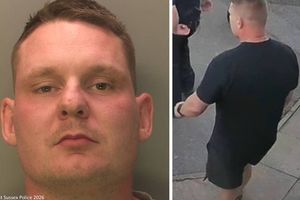 Police manhunt for drug dealer who escaped open prison by climbing fence
 'No role' for White House in extradition to UK of Tate brothers, says US secretary of state Marco Rubio