
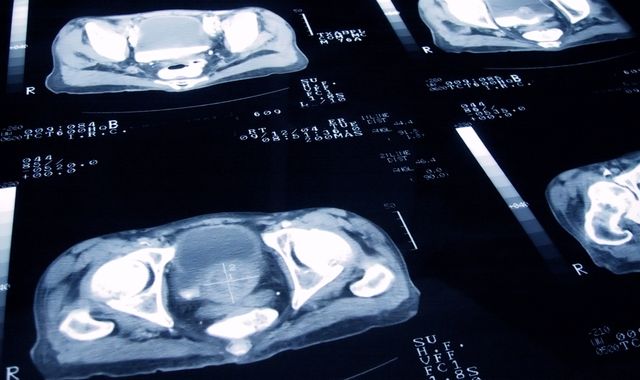
Scientists have found clues that could help predict who will develop aggressive prostate cancer many years in advance.
The Oxford University team detected clear biological differences between those who developed the disease and those who didn't.
They also found proteins linked to more aggressive, life-threatening cases of prostate cancer.
Those involved in the study were followed up for about 16 years as scientists measured more than 6,000 proteins in their blood.
Nearly 1,000 people who went on to develop the disease were part of the research, as was a random sample of 1,573 men.
Twelve proteins were identified that were linked to prostate cancer diagnosed more than 15 years later. These included GZMK, which is produced by immune cells involved in recognising and destroying abnormal cells.
Researchers said this suggests the body may be reacting and dealing with the cancer long before it's diagnosed.
Seven proteins linked to aggressive prostate cancer were also identified, including ANKRD1, which was found in cancers that spread or caused early death.
"By measuring thousands of proteins in blood collected years before diagnosis, we can begin to investigate how men who later develop aggressive prostate cancer may differ from men who do not," said study author Dr Zhe Huang, an epidemiologist at Oxford Population Health.
Dr Huang said the results could help improve the understanding of aggressive prostate cancer and find markers to "improve how we assess risk".
One in eight men will be diagnosed with the disease in their lifetime, according to Prostate Cancer UK, and about 12,000 in Britain die from it every year.
Many cases progress so slowly they do not cause significant problems or early death, but some can be very aggressive.
The study also found genes already known to be important in prostate cancer - such as ERBB3, KRAS and NRAS - were linked to aggressive cases diagnosed around a decade later.
More from Sky News:
One man diagnosed with prostate cancer in UK 'every eight minutes'
'Concerning' rise in cancer cases among adults under 50
The findings also said more research was needed before proteins could be used as a test for the disease.
Professor Prabhakar Rajan, from Queen Mary University, said it did not yet show a protein-based blood test could reliably identify who will get aggressive prostate cancer.
Cancer Research UK director of research, Dr Iain Foulkes, said: "While there is more work to do, discoveries like this could pave the way for better ways to identify men at risk and, ultimately, prevent aggressive prostate cancer before it develops."

(c) Sky News 2026: Vital clues could help predict prostate cancer years in advance, study suggests
 Websites around the world taken down to protect systems - as critical software update issued
 Killers who refuse to attend sentencing will face new penalties under government plan
 Jailed former DUP leader Jeffrey Donaldson accused of raping woman inside Parliament - reports
 Police given more time to question two men re-arrested in RAF Fairford investigation
 Man forced to pay shooting victim, age 9, in first-of-its-kind compensation
 Three more people arrested over death of Manchester woman