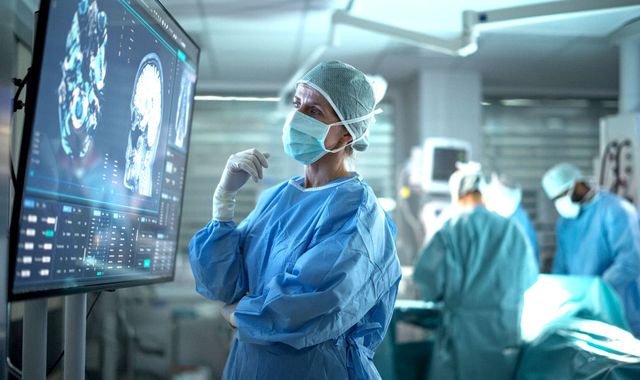
Brain tumour patients are to be offered rapid genetic testing as part of a new pilot study which experts say could "transform" diagnosis and treatment.
The new DNA test will reduce the average diagnosis rates from weeks to days, NHS England officials have said.
When medics need to know the precise type of tumour during surgery, diagnosis can be confirmed within two hours while the operation is still happening.
The test, which works by quickly analysing the genetic code of a sample of a patient's tumour, will be piloted in specialist centres around England.
It is hoped the move will help patients get personalised care sooner and could lead them to enrol on clinical trials which they otherwise would have missed out on.
Brain tumours are difficult to diagnose, with more than 100 different types which range from slow-growing tumours to aggressive cancers.
Professor Frankie Swords, NHS England's medical director, said: "This remarkable rapid test has the potential to completely transform how we diagnose brain tumours, with results reaching patients in a matter of days rather than weeks.
"This is a huge leap forward for patients - a faster diagnosis means they can start the right treatment or access clinical trials sooner, while for some patients it could mean surgeons can make potentially life-changing decisions about their surgery while on the operating table."
The rapid genomic test was created by experts at the University of Nottingham and Nottingham University Hospitals NHS Trust, where it is already in use.
Stuart Smith, consultant neurosurgeon at the trust and clinical associate professor at the university, said the test "will save valuable waiting time for patients who potentially are being told they don't have time on their side".
He added: "The ability to have detailed information about the tumour at the point when decisions are being made in the operating theatre is game-changing.
"In some cases, that can help us judge how far we should safely go while protecting healthy brain tissue.
"This gives us a glimpse of how brain tumour surgery could change in the future - with genomic information available during the operation itself, helping us make more informed decisions for each individual patient."
More from Sky News:
NHS trust prepared to review 4,500 breast cancer cases after failings
Patient Steve Palmer, 55, from Nottingham, was diagnosed with a grade 4 glioblastoma after collapsing at the gym.
He said: "For me, getting that quick diagnosis of exactly what type of tumour I had was a key thing, because it meant we could get the treatment plan in place very rapidly.
"Getting that definite result quickly took away what could have been weeks of anxiety.
"I'd had the surgery and I just wanted to get on to the next phase of treatment and recovery, and get on with fighting whatever I've got to fight."
Professor Dame Sue Hill, chief scientific officer for England and senior responsible officer for genomics in the NHS, described it as a "world-leading development for NHS genomics".
Dr Simon Newman, chief scientific officer at The Brain Tumour Charity, added: "More than a quarter of patients have to wait over a month following surgery to find out which type of brain tumour they have.
"They face weeks of uncertainty and not knowing their prognosis, which one patient described as a 'cruel, traumatic experience'.
"We are delighted to be part of the team helping to facilitate this landmark pilot, which builds on our Brain Matrix trial.
"It will help shorten what can be an agonising wait for answers and, importantly, provide certainty that enables patients and their families to plan ahead."

(c) Sky News 2026: NHS pilots rapid genomic test to transform brain tumour diagnosis and treatment, experts say
 Anti-migrant activist Danny Tommo charged with criminal damage over 'boat slashing'
 Russia could attack a NATO country within months, Danish intelligence warns
 Scrapping windfall tax early could cost UK £8.6bn by 2030, campaigners warn