
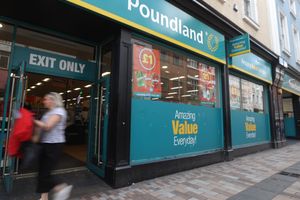
Poundland's collapse into administration was the outcome feared most by staff in the run-up to Christmas - and the government too.
The insolvency process ahead will likely lead to thousands of job losses though many could be saved as buyers move to snap up many of the discount retailer's 600 stores across the UK and Ireland.
Nevertheless, the outcome of the sale process is likely to prompt a fierce backlash, with the US investment firm Gordon Brothers already facing scrutiny from Downing Street over its handling of a business it bought for just €1 in June last year.
Here, Sky News explains how Poundland got to this point and why Gordon Brothers rejected going concern bids.
What did Gordon Brothers buy?
Pepco sold Poundland, which trades as Dealz in the Republic of Ireland, for a nominal sum as it grappled higher costs in the business, including from taxes and minimum pay rules, and poor customer engagement with its stock.
It's a low margin operation. Poundland contributed 33% to Pepco's group revenues in its final financial year within the Polish firm but just 5% of profits.
Pepco retained a minority stake through a secured loan and overdraught facilities in support of the sale for that nominal €1.
A subsequent court-approved restructuring allowed Gordon Brothers to close 200 unprofitable stores with the loss of 2,000 jobs.
I thought Poundland had become profitable - so why sell?
Poundland remained under the same management team, led by managing director Barry Williams, following the sale.
It was credited with driving a turnaround to profitability on one measure, which strips out some costs and charges, following a return to growth in comparable store sales.
But Gordon Brothers put it up for sale in September - just 15 months after it bought the business - blaming continued vulnerability to a potential downturn.
It later rejected offers for a solvent sale and was accused of dragging its heels on the release of funds to maintain its trading momentum. Gordon Brothers has consistently pushed back against suggestions that funding was frozen.
Why did the government intervene?
When it became clear that Poundland could collapse, pressure was applied by the government to secure a 'going concern' outcome to preserve jobs.
Poundland secured, on 16 November, an extension of its notice of intention to appoint administrators, giving it protection from creditors until the end of 25 November.
Working capital was later released to the retailer by Gordon Brothers amid concerns about low stock.
The money, amounting around £20m in total, also ensured November's payroll could be met.
Were there no bids?
The extension allowed more time to secure a buyer but, ultimately, Gordon Brothers may have favoured Wednesday's outcome all along.
Sky News revealed on 14 November that the investment firm had raked in close to £20m in fees and interest payments from the discounter during its brief stint as owner - and could stand to gain millions more from its collapse.
It is Poundland's main creditor and ahead of suppliers in the pecking order.
There were up to four parties interested in a solvent acquisition of Poundland including Martin Property Group, a Northern Irish-based company which had seen two fully financed offers rejected.
The main stumbling block to a deal appears to have been that no offer covered the repayment of the Pepco loan to Gordon Brothers in full and immediately.
It's believed to be worth more than £20m.
Gordon Brothers has, however, recused itself from the lucrative role of liquidating Poundland's stores.
What happens now?
Administrators at AlixPartners have assumed control of Poundland.
Their main duty is now recovering as much value as possible for the company's creditors - those owed money - including Gordon Brothers.
They also hope other employers needing staff will be in touch with offers of jobs for Poundland's workforce.
Rival retailers would be expected to snap up some stores but there is no guarantee of a transfer of employment.
B&M, Tesco and Lidl are among names expected to seek to cherry-pick sites.
Are the stores still trading?
All Poundland stores in the UK and Dealz sites in Ireland will continue to sell stock for the moment, maintaining employment for its staff.
Offices and distribution centres are also open for the foreseeable future - likely to be only a couple of weeks at most.
There will come a time when the operation is shut down, likely at the end of the month when a staff pay guarantee comes to an end.
What's the government's response?
No sign of a backlash yet.
A spokesperson said: "Poundland stores are a vital part of many high streets and communities. They are valued by families for their affordable goods and the local jobs they provide.
"News of its administration is very concerning particularly for the almost 10,000 workers and their families. We stand ready to support affected staff and want to see as many jobs and stores saved as possible.
"We understand there is still strong interest from bidders for the whole business and parts of the business. The administrators must now be given time and space to do their job."
Will the Poundland name survive?
There is a chance that a buyer could be found for the brand name, allowing a new Poundland to emerge in future.
As things stand, it will disappear.

(c) Sky News 2026: Poundland insolvency: What went wrong and what next?
 Poundland collapse into administration leaves 10,500 jobs at risk
 RAF 'moving aircraft to hangars at night to protect them from drone threats'
 Two men appear in court accused of stealing cufflinks and a clock from William and Kate's Norfolk home