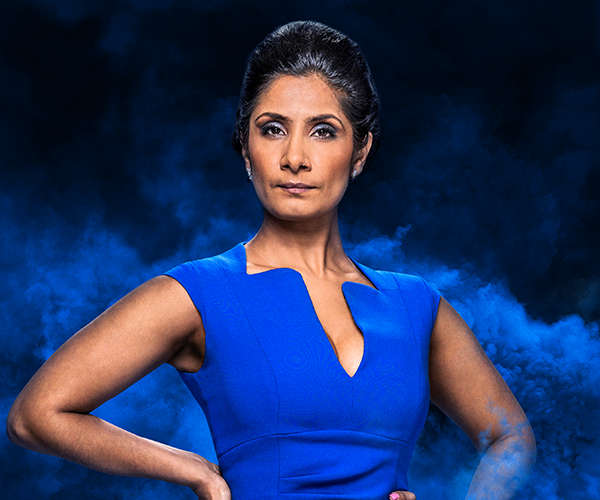
2025 conference marked a low ebb for the Conservatives.
One year into her leadership, Kemi Badenoch was unpopular and unable to make a mark even as Sir Keir Starmer's Labour government floundered.
The Conservatives fell to an all-time low in polling, and suffered their worst-ever local election results. Reform UK looked like the coming force in British politics, and the main question was whether the right would unite behind Nigel Farage's banner.
The Conservatives were in a fight for relevance and, perhaps, survival.
This near-death experience may help explain the euphoric mood reported among Conservative activists as they gather for their annual conference this week. Things are looking up at last.
The public have warmed to Kemi Badenoch, soured on Nigel Farage, and the Conservatives have hauled themselves back into polling contention.
Yet these achievements, real as they are, have so far only replaced an uneven divide on the right with an even split. Overhauling Reform now looks achievable but victory over a Labour government reinvigorated by new leadership looks as far off as ever.
Kemi Badenoch has succeeded in winning a boost and restoring her party to relevance.
The challenge now is to recover and consolidate the Conservatives' position as the only plausible right-wing alternative so they can capitalise if the current government stumbles and the public mood shifts to the right.
The headline polling: Signs of life?
The big rebound in the morale of Conservative activists is hard to justify based on headline polling alone.
True, the party has bounced back from its low ebb. The Conservatives now win an average of just under 20% of those expressing a preference in polls published in the run-up to this party conference, up nearly three points on their average position a year ago.
That is an encouraging trend, particularly as the Tory rise has coincided with a slide in support for Reform UK.
A year ago Reform led the Conservatives by 10 points or more in most polls. That gap has now fallen to a couple of points on average, with some polls putting the Conservatives level pegging or even ahead of their right-wing rivals.
But the Conservatives' poll performance looks less impressive if we take a longer view.
The party are still more than four points below their vote share in the 2024 general election, the Conservatives' worst election result since universal franchise voting began.
Climbing back from a battle for fourth place in the polls with the Liberal Democrats is an achievement of sorts. But a party sitting well behind its worst-ever general election share still has work to do.
The picture is more consistently positive if we switch attention to Conservative leader Kemi Badenoch.
Badenoch had a rocky start as leader which saw her go into last year's Conservative conference with average personal approval ratings of -26.
Since then her polling has trended strongly upwards, and her net approval is now -3, ahead of the three other opposition leaders.
This positive shift is driven by both a large rise in the share approving of Badenoch and a decline in disapprovals, suggesting the Conservative leader has both convinced the undecided and converted some of those previously unimpressed by her performance.
The picture is more mixed if we switch from assessments of Badenoch in isolation to comparisons with other leaders. Several pollsters regularly ask people which of two leaders would make the best prime minister.
The good news for Conservatives is that Kemi Badenoch has improved her standing versus all three of the other opposition party leaders over the past year.
Badenoch now leads Sir Ed Davey on this measure, having trailed him a year ago, and opened up a larger lead against Green leader Zack Polanski.
The biggest shift, however, has come on the most important contest for the Tories - the battle with Nigel Farage to be the strongest contender on the right.
Last August, YouGov found Badenoch narrowly trailing Farage on the best prime minister question - 23% favoured Farage, 21% Badenoch, with most respondents undecided.
In the most recent YouGov polling from this August, Badenoch has opened up a large lead over her Reform UK rival - 45% now choose the Conservative leader while 16% opt for Farage.
While Badenoch has advanced against her main opposition rivals, she has lost ground in comparisons with the incumbent Labour prime minister.
A year ago the Conservative leader was running Sir Keir Starmer close - an average of 24% of poll respondents chose Badenoch as the best PM, while 29% preferred Starmer.
Badenoch trails Andy Burnham by much larger margins - an average of 26% back Badenoch while 44% back Burnham.
Elections: Still going backwards
While the Conservative position has improved on several polling indicators, this recovery is yet to show in election results.
The Conservative vote share slumped to record lows of just 12% in the Scottish Parliament election and under 11% in elections for the new Welsh Senedd.
In both cases, the Conservatives finished well behind Reform UK, who for the first time supplanted the Tories as the main right-wing opposition in both devolved legislatures.
The Conservative collapse in the English local elections this May was less catastrophic than last year, but not by much.
The party won a projected National Equivalent Vote (NEV) of 20%, up two points on last year's record low but still the second lowest NEV figure ever recorded. The Conservatives suffered a net loss of 563 seats, with over four in every 10 Tory incumbents defeated.
There were some bright spots, particularly in and around London, but the overall picture was still bleak, as both the Liberal Democrats and Reform UK advanced in former Conservative heartlands.
Four out of 10 of all the councillors in England were Conservatives as recently as 2021. Now the figure sits at 20.8%, a new record low.
The Conservatives also performed poorly in the past year's Westminster and mayoral by-elections, though with one important exception.
The Conservatives finished in fourth place and lost their deposits in both Gorton and Denton - winning 1.9% of the vote - and Makerfield, winning 2.2%, the party's two worst by-election performances ever in vote share terms.
The Greater Manchester mayoral by-election was arguably even worse for the Conservatives, who finished fifth overall, and third among right-wing parties behind both Reform UK and Restore Britain, a party only founded months earlier.
The Conservatives did better in the two Scottish Westminster by-elections in June.
They increased their vote share and moved into second place in Arbroath and Broughty Ferry. But Aberdeen South provided the standout Conservative election result of the year, as the party increased their vote share by over 25 points to take the seat from the SNP.
This was the first by-election gain the Conservatives had achieved in Scotland in 60 years, and their biggest vote share increase the party had achieved in any post-war by-election.
While what should have been a headline grabbing win was overshadowed by Andy Burnham's victory on the same day in Makerfield, a big win on a big swing provided the Conservative faithful with a much needed morale boost during another bruising year at the ballot box.
Issues: A more right-wing public mood?
While the Conservatives remain behind in voting intention polls, evidence from the long-running British Social Attitudes (BSA) surveys suggests the public mood may be shifting rightwards.
The BSA asked the public about tax and spending priorities for over four decades, and in their most recent data from 2025, the share of respondents saying they wanted to see tax and spending cut hit a record high of 19%, while the share saying they wanted taxes increased to fund more spending on services fell to 36%, the lowest level since 2012.
Public attitudes on welfare have also hardened, with the same 2025 BSA survey showing sharp falls in net support for more spending on all groups receiving welfare, compared with 2021 when the survey last asked these questions.
However, though the public want increases in spending slowed down, there is currently little appetite to cut most benefits.
This rightward shift in attitudes to the size of the state and the generosity of the welfare safety net all predate Andy Burnham's arrival as Labour prime minister.
The new prime minister has already made ambitious promises likely to increase the size and cost of the state, taking his government leftwards at a moment when the public are moving in the opposite direction.
This may open up a window of opportunity for traditional small state Conservative arguments in the months and years to come.
Advantage Badenoch in the battle for the right?
Two large recent studies from the pollster YouGov have underlined two advantages the Conservatives currently have over Reform, and one major obstacle they face in the battle to reunite the right.
The most recent YouGov MRP model projects the Conservatives to win more Westminster seats than Reform despite a lower share of the national vote.
This reflects the more efficient geographical distribution of Conservative support, meaning they convert more of their vote into seat wins, while many Reform votes are "wasted" in seats where they come second.
A second recent YouGov study illustrates how this Conservative advantage may grow as an election approaches and voters start to consider tactical voting options.
Reform are a more polarising party, and voters opposed to them are becoming ever more willing to cast tactical ballots designed to prevent a local Reform victory, including tactical votes for the Conservatives.
This benefits the Conservatives directly in the many Tory seats where Reform are the strongest challenger. But evidence that Reform are too toxic for many voters also helps the Conservatives make the case they are the only right-wing party capable of building an election-winning coalition.
A blue dawn breaking?
This has been a good year for the Conservatives on several fronts.
Their polling is improving, their leader is becoming more popular and the public mood is shifting in a rightward direction on economic questions. But the Conservatives still poll below their showing in the last general election, they still trail both Labour and Reform UK in polling, and they are still going backwards in elections.
Badenoch has got her party back on the pitch, but the divide on the right looks as deep as ever, and the incumbent Labour government is enjoying a moment in the sun under a popular new leader. There is a long way to go yet before the Conservatives look like potential winners again.
This is the fifth in a series of articles reviewing the polling and electoral performance of the parties as they gather for their annual conferences. Previous versions have covered the performance of Labour, Reform UK, the Liberal Democrats and the Green Party.

(c) Sky News 2026: Conservative Party: Badenoch has lifted Tories from all-time low - but can she turn this into
 Man shot dead in 'senseless act of violence' as people gathered for west London memorial service
 Who is Khaldoon Al Mubarak, Manchester City's chairman?
 Andy Burnham scraps Starmer-era plan to curb jury trials
 UK-Iranian national arrested in RAF Fairford investigation released on bail
 Ticks carrying life-threatening virus living longer in UK due to heatwaves, expert warns
 Man accused of Ann Widdecombe murder charged with preparing terrorist acts including against Nigel Farage