
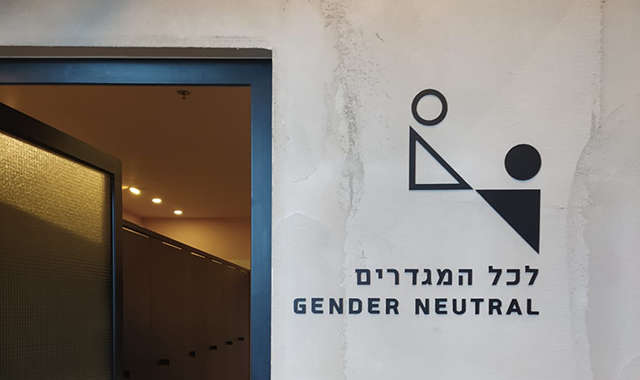
Lambeth, Hackney, Haringey, Lewisham, Southwark and Waltham Forest have pledged to maintain trans-inclusive services as new guidance on single-sex spaces came into force on 5 August.
Six London councils have pledged to keep services trans-inclusive despite new guidance on single-sex spaces coming into effect this last Tuesday.
Leaders of Lambeth, Hackney, Haringey, Lewisham, Southwark and Waltham Forest councils issued a joint letter on 5 August, the same day the Equality and Human Rights Commission’s guidance came into effect across England, Scotland and Wales.
The six boroughs said they would not require staff to “police” access to public spaces, arguing that the guidance would make transgender and non-binary residents feel under attack.
Instagram post
In their letter to Bridget Phillipson MP, Minister for Women and Equalities, and the Ministry of Housing, Communities and Local Government, the leaders said: “Trans women are women, trans men are men, and non-binary identities are fundamentally valid.”
The EHRC guidance says access to public single-sex spaces, such as toilets, changing rooms and rape crisis centres, should now be determined by a person’s sex as assigned at birth. The guidance is not itself law, but provides a framework for operating within the law following the Supreme Court’s judgment last year.
Legal challenges have already begun. According to The Times, Hackney has received a formal legal challenge over its failure to provide services exclusively for cisgender women.
In an interview with Times Radio, EHRC chair Mary-Ann Stephenson warned that public bodies remain legally “obliged to follow the law”.
According to the open letter, the six boroughs have some of the country’s largest trans and non-binary communities. The Good Law Project has launched a judicial review of the guidance, backed by Labour MPs including Nadia Whittome, arguing that it amounts to a “blanket prohibition on trans-inclusive gendered services”.
Cat MacLean, a spokesperson for human rights advocacy organisation the Good Law Project, told Gaydio on 7 August that the EHRC’s new guidance gives businesses and service providers an impossible choice.
Speaking to Kriss Herbert on Breakfast, MacLean said the policy “essentially gives businesses and associations one of two choices: you can either become only available for what would be called biological women or cis women, or you have to open up your services to everyone, including men.”
In challenging the guidance, the Good Law Project argues that the EHRC has wrongly interpreted the law.
“The EHRC has basically said that if you’re trans-inclusive, you’re very likely to be discriminatory, and we think they’re wrong about that,” MacLean said.
 EXCLUSIVE: Bethany Antonia says she felt ‘devastated’ after BBC censored her ‘Protect the Dolls’ T-shirt
 Good Law Project challenges ‘gay tax’ on NHS IVF
 Ella Morgan pays touching tribute to Brianna Ghey at Pride of Britain Awards
 Glee is officially coming back as Disney+ and Hulu order a reboot
 Why should you care about International Pronouns Day?
 Blacktober Fest: Drag Race star, DJs till 3am and a big Black queer party in London








Comments
Add a comment