
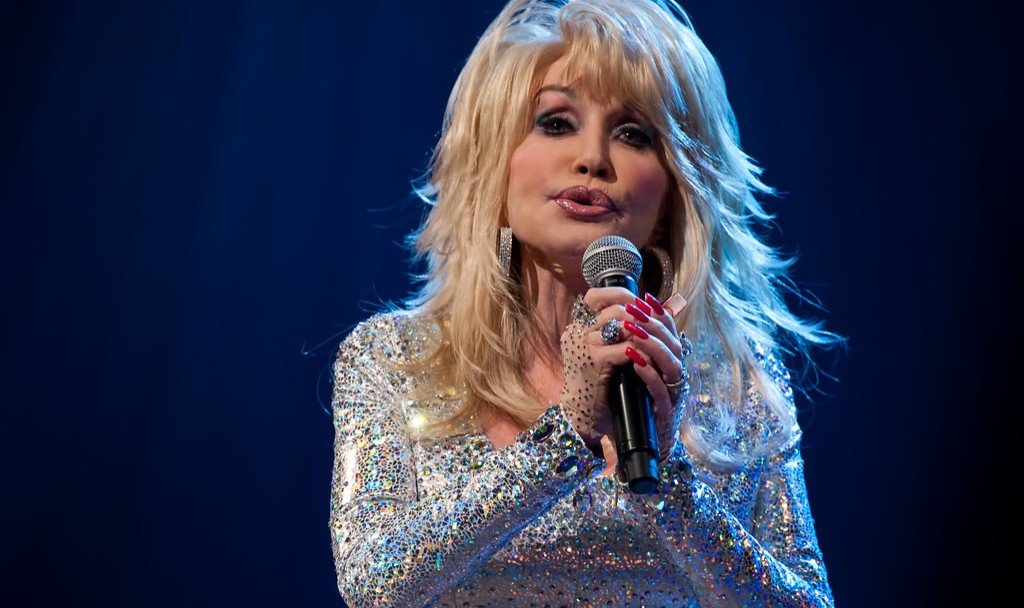
Dolly Parton was loved by just about everyone, but there's a particular reason her death is hitting the LGBTQ+ community so hard.
Country music legend Dolly Parton died peacefully in Nashville on 25 August 2026, aged 80, after a brief battle with cancer. Tributes have poured in from across the LGBTQ+ community, with Human Rights Campaign president Kelley Robinson saying Dolly "stood with our community long before others in entertainment".
From welcoming queer people into Dollywood to writing a song for a groundbreaking trans film, Dolly consistently used her platform to make people feel accepted. And, of course, she became one of the biggest camp icons in the world along the way.
Here are some of the reasons Dolly meant so much to LGBTQ+ people.
She famously said she loved everybody
Dolly rarely positioned herself as a political campaigner, but she was very clear about her approach to LGBTQ+ people. Discussing her own family and circle in a 2023 interview with The Hollywood Reporter, she said "I've got transgender people. I've got gays. I've got lesbians... all within my own family. I know and love them all, and I do not judge."
In the same interview, she noted of LGBTQ+ individuals, "They cannot help that any more than I can help being Dolly Parton." That straightforward attitude became a huge part of her appeal. She didn't need to make a grand statement every time she was asked about LGBTQ+ people - her message was essentially that people should be allowed to live their lives.
She wrote Travelin' Thru for Transamerica
Dolly Parton wrote and performed "Travelin' Thru" for the 2005 film Transamerica, which follows a transgender woman on a road trip with her son. The song earned an Academy Award nomination for Best Song and a Golden Globe nomination for Best Original Song.
Dolly explained that her motivation in writing the song was that "Some people are blind or ignorant, and you can't be that prejudiced and hateful and go through this world and still be happy." The Oscar ultimately went to "It's Hard Out Here for a Pimp" from Hustle & Flow but, always classy, Dolly wrote them a letter of congratulations and expressed her joy that the award still went to Tennessee!
She collaborated with Miley Cyrus on Rainbowland
Dolly's relationship with her goddaughter Miley Cyrus also produced one very queer pop moment. The pair teamed up on "Rainbowland", a song from Miley's 2017 album Younger Now that celebrated acceptance and love. Dolly's involvement gave the message an extra dose of country-crossover star power.
She has consistently embraced drag
There are few things more Dolly than Dolly Parton entering a drag queen lookalike competition... and losing. She once entered a contest in West Hollywood alongside drag queens dressed as her, exaggerating her own look with bigger hair and makeup — and didn't win, not even coming close.
She has also joked that, if she hadn't been born a woman, she would probably have been a drag queen herself. Honestly, that's almost too perfect.
Her music became part of queer culture
Then there's the obvious one. Dolly's songs have been everywhere in queer culture for decades. "Jolene", "9 to 5", "I Will Always Love You", "Here You Come Again" and countless others have been performed in gay bars, on the drag race stage and passed down through generations of LGBTQ+ fans.
She understood the power of being unapologetically yourself
There was something deeply queer about Dolly's entire persona. The enormous hair. The rhinestones. The boobs. The lashes. The tiny waist. The jokes about her appearance. The complete refusal to tone herself down.
She built an entire career around being Dolly, and she never seemed particularly interested in becoming more conventional to make other people comfortable. That kind of self-invention has always resonated with LGBTQ+ people.
She made acceptance feel possible across generations
Perhaps the biggest reason Dolly became so special to queer people is that she crossed generations. She could be your nan's favourite country singer, your mum's 9 to 5 icon and your gay best mate's camp fantasy all at once.
She was a huge celebrity who could walk into spaces where LGBTQ+ people didn't always feel represented and make it clear that being yourself wasn't something to apologise for - and that's a pretty powerful legacy.
 Rocky Horror legend Tim Curry dies aged 80
 LGBTQ+ icons lead tributes to Dolly Parton after country legend's death
 Dolly Parton, country music icon and beloved LGBTQ+ ally, dies at 80
 UK AIDS Memorial Quilt on display in Manchester for Pride weekend
 Life-saving HIV drug approved for hundreds on NHS England after years of campaigning
 Heroes and Nashville star Hayden Panettiere dies aged 36



Comments
Add a comment