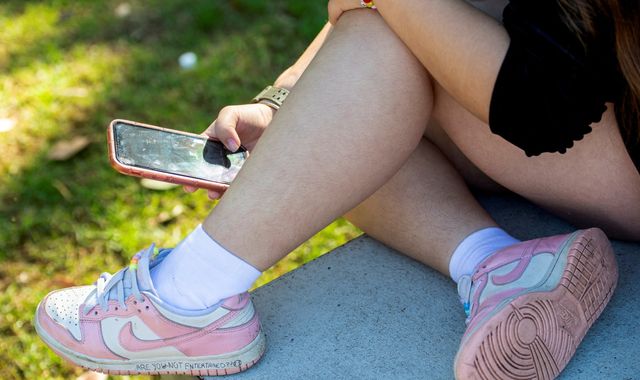
More than two-thirds of children have regularly seen content telling them how to look, dress and behave - and which careers and interests to pursue, according to research.
A charity questioned 1,440 seven to 17-year-olds and found seven in 10 girls (70%) and more than two-thirds of boys (67%) encountered such messages online.
Six in 10 (62%) young people also said they wanted social media companies to do more to remove harmful content.
The survey was done by Plan International UK, an organisation which works to advance girls' equality.
It also raised concerns over the workings of social media algorithms - a familiar theme when it comes to young people's online use.
The charity set up six fake TikTok accounts and found content for 13-16-year-olds became "clearly gendered" within just 20 minutes and could expose kids to "increasingly specific and harmful gendered content" after less than two hours of scrolling.
Accounts for girls were shown "unrealistic beauty standards and luxury lifestyles", according to the research.
One of the accounts - for a 13-year-old girl built around drama, music and dance - ended up being shown clips about mental health and feeling sad. They were later presented with videos on suicide, self-harm and substance abuse.
The charity said boys' accounts were served up content described as "glorifying wealth, physical strength and emotional isolation, alongside misogynistic narratives".
Plan said the content was reported during testing, but was found by TikTok not to breach community guidelines.
Kathleen Spencer-Chapman, Plan's director of influencing and external affairs, said the research suggested misogyny "is not confined to the darkest corners of the internet, it is woven into the everyday content that children are fed without asking for it".
She added: "While girls are more likely to recognise and call out sexist content, boys are too often trapped in an online echo chamber where narrow ideas of masculinity centred on money and dominance are normalised.
"The attitudes shaped online rarely stay online - they influence how young people see themselves, how they treat one another and how they understand the world around them."
She called on the government to do more to require tech companies to design social media apps "that put the safety and wellbeing of young people first".
The government and TikTok have been contacted for comment.
The research comes soon after a landmark US case in which Meta - the owner of Facebook and Instagram - agreed to pay up to $18bn (£13.2bn) to settle claims that its platforms harmed children.
The trial saw Meta accused of knowingly and deliberately designing features that get children addicted to its platforms.
According to court papers, it denied wrongdoing while agreeing to the settlement.

(c) Sky News 2026: Children's online feeds telling them 'how they should look and behave'
 Apple launches first foldable iPhone - its most expensive to date
 More than 10% chance AI 'could kill all humans' - as Anthropic reveals another 'cybersecurity' incident
 Christie's record-breaking art auction from the personal collection of Monsoon founder